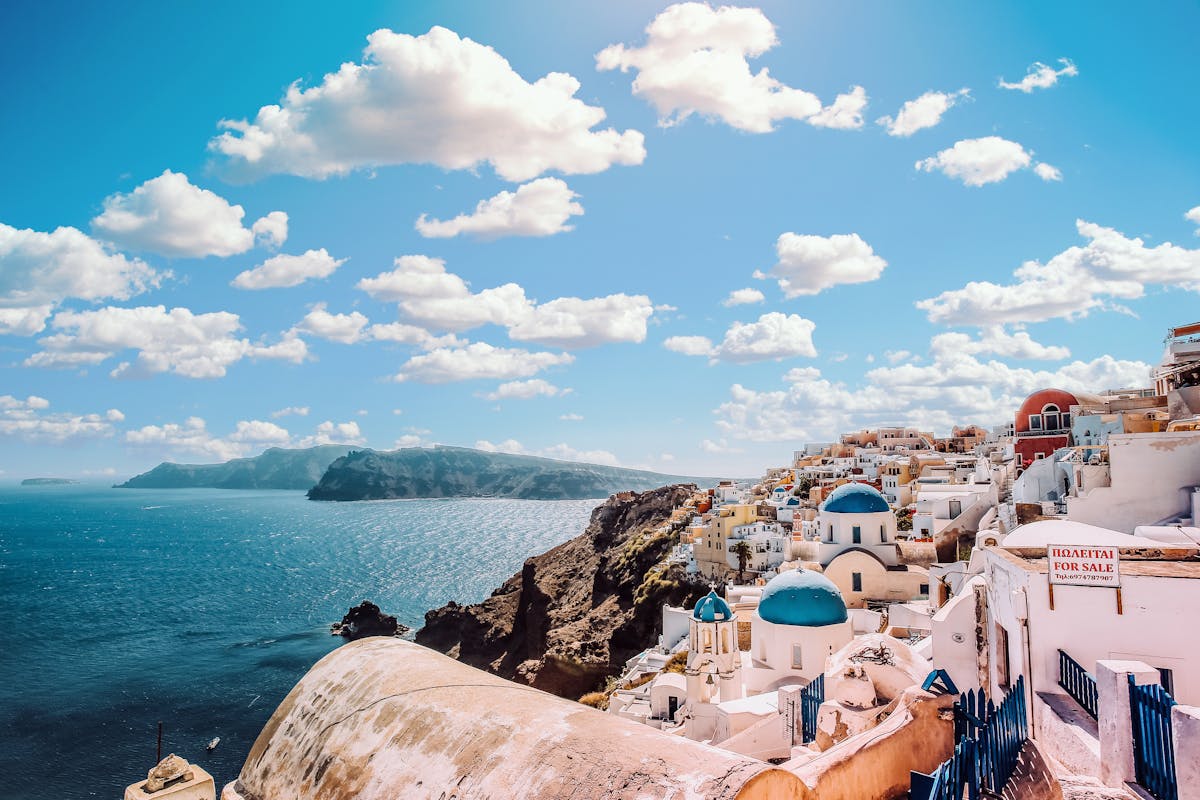
Red West has become one of the most reliable Greek-language sources for travelers who want more than a filtered Instagram itinerary. This guide takes a different approach from the standard “top destinations” format: rather than listing places, it organizes Greece’s tourism landscape by traveler type, budget strategy, and the kind of experience each region genuinely delivers. Whether you are planning a first visit or returning to discover what you missed, the editorial team at Red West brings you the practical intelligence that turns a decent holiday into an exceptional one. The keyword here — as it is in everything the platform covers — is Western Aegean meets Eastern heritage, packaged for the modern, well-informed tourist.
The Case for Going Beyond the Obvious Greek Destinations
Greece’s tourism infrastructure funnels enormous numbers of visitors toward a handful of heavily marketed destinations. Santorini, Mykonos, Rhodes, and Crete absorb the majority of international arrivals every season, and for understandable reasons: they are excellent. But the country has more than 6,000 islands, a mainland the size of England, and regional cultures so distinct that a traveler who has only seen the Cyclades has, in honest terms, seen a narrow slice of what Greece offers. Red West consistently advocates for broader exploration — not because the famous destinations are overrated, but because the less-visited alternatives are genuinely underrated and frequently better value.
The practical argument is straightforward: accommodation costs on Paros during peak season can be three to four times what you would pay on Ikaria for a comparable quality of room and beach. The Pelion peninsula on the Greek mainland offers cooler summer temperatures, verdant forests, and a coastline with some of the cleanest water in the Aegean — at a fraction of the price of a Cycladic island. Understanding this geography is the first step toward smarter trip planning, and it is exactly the kind of orientation that Red West provides as a matter of editorial policy.
Greece for Beach Lovers: Where the Water Is Actually Best
Beach quality in Greece is not evenly distributed. Water clarity is highest in the eastern Aegean — the islands of Samos, Ikaria, Chios, and the Dodecanese — where currents from the deep Aegean basin keep the sea exceptionally clean. The Ionian Sea on the western side has a different character: warmer, calmer, and with a greenish-blue color produced by its relative shallowness. Both are excellent; they are simply different experiences, and knowing the distinction helps you match the destination to what you actually want.
For pure sand quality, the Halkidiki peninsula in northern Greece has beaches — particularly on the Kassandra and Sithonia prongs — that rival anything in the Cyclades, with the significant advantage that they are accessible by car from Thessaloniki and remain less crowded. The beach at Kavourotrypes on Sithonia, a series of cove pools formed by rock formations, is among the most photographed in Greece and yet routinely underrepresented in international travel coverage. Red West has flagged this repeatedly as an editorial priority: the north deserves more attention than it receives from the broader tourism industry.
The Athens Gateway: Why Smart Travelers Add Three Extra Days
The standard international travel pattern treats Athens as a transit hub — arrive, spend one night, take the ferry or domestic flight to an island the next morning. This is a strategic mistake that Red West has analyzed at some length. Athens has undergone a genuine urban renaissance over the past decade, and the city now offers a restaurant scene, a contemporary art landscape, and a nightlife culture that match any major European capital.
The neighborhoods of Monastiraki, Psyrri, and Koukaki are walkable, full of independent restaurants and bars, and offer proximity to the major archaeological sites without the premium pricing of tourist-facing areas. The National Archaeological Museum — free to EU citizens and heavily discounted for others — holds the finest collection of ancient Greek artifacts in existence, including the Antikythera Mechanism, the world’s oldest known analog computer. The new Acropolis Museum is architecturally striking and curates the Parthenon marbles with a seriousness of purpose that justifies several hours. Three days in Athens, properly used, transforms the city from a stopover into a destination in its own right. This is a consistent editorial position at Red West: context makes the islands more meaningful, not less.
Accessible Tourism in Greece: A Growing and Important Dimension
Greece has historically lagged behind northern European countries in making its tourism infrastructure accessible to travelers with mobility limitations, visual impairments, or other disabilities. This is changing, though unevenly, and Red West tracks the developments. The Greek government has invested in improving accessibility on major archaeological sites — the Acropolis now has a ramp system and a purpose-built lift, and several other major sites have followed. More recently, digital platforms have begun making it easier for travelers to identify accessible accommodations, beaches, and transport options before they arrive. The broader τουρισμός για όλους platform — tourism for all — represents a serious attempt to match availability with demand, and the results are beginning to show in visitor numbers from demographics that previously found Greek travel logistically difficult. This is not a niche issue: it affects a significant share of potential travelers and has real economic implications for the destinations that get the infrastructure right.
Santorini at the Right Time: The Guide to Visiting Without Regret
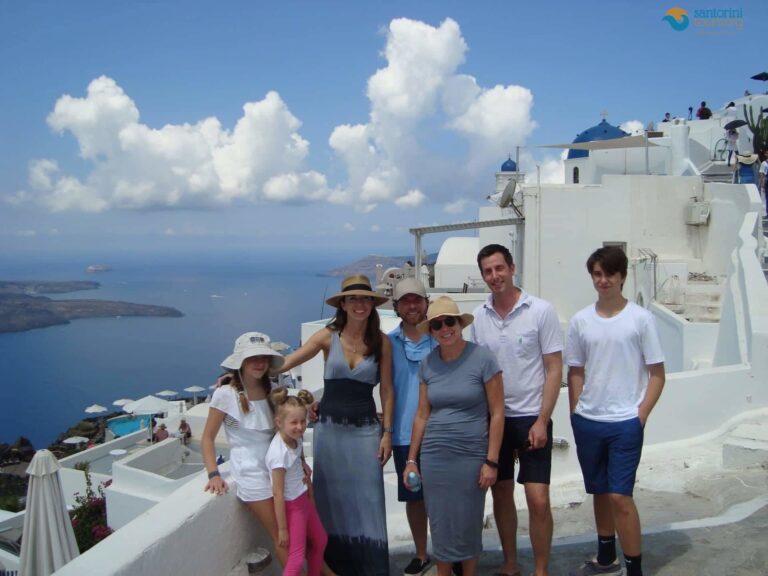
Santorini in August is a legitimate logistical challenge. The island’s infrastructure — roads, ferry terminals, restaurants, viewpoints — was designed for a population of around 15,000 and now receives more than three million visitors per year. The result during peak weeks is queues, heat, and a sense of being processed rather than welcomed. The solution is timing. Santorini in late April, May, October, or early November is a completely different destination: the weather is excellent, the light is softer and more photogenic, and the famous caldera views from Oia or Imerovigli can be experienced in something approaching the solitude they deserve.
The practical guide to making the most of Santorini — including less-documented experiences like the coastal walk from Vlychada to Red Beach, the morning boat to the volcanic island of Nea Kameni, and the winemakers of the Episkopi Gonias area who still harvest Assyrtiko in the traditional basket-weave vine pattern — is something Red West has covered in considerable depth. The platform’s guide to a Σαντορίνη ταξίδι goes well beyond the standard highlights, giving travelers a practical framework for experiencing the island across multiple days and different types of activity. Read it before you book, not after you arrive.
Mountain Tourism in Greece: The Underexplored Interior
Greece is overwhelmingly marketed as a sea destination, but the mainland’s mountainous interior represents one of European tourism’s great undiscovered opportunities. The Vikos Gorge in Epirus — technically the world’s deepest gorge relative to its width according to Guinness records — is a full-day hiking experience that moves through forests of ancient beech and oak, past springs, medieval bridges, and stone villages where traditional architecture has been preserved because modernization never arrived at scale.
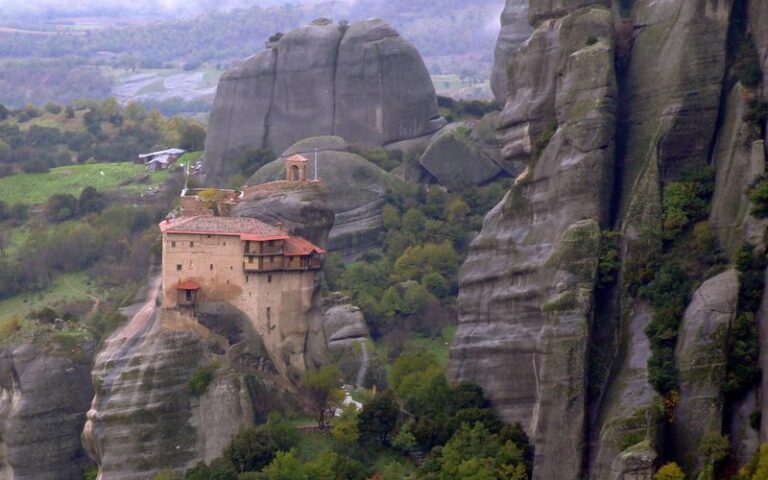
Mount Olympus, Greece’s highest peak at 2,917 meters, is accessible to non-technical climbers via well-marked paths from the base town of Litochoro. The summit ridgeline walk between the Skolio and Mytikas peaks — the mythological seat of the Olympian gods — is one of the most dramatic experiences available in Greek tourism, and it requires nothing more than good boots, a weather check, and the willingness to start before dawn. The Meteora monasteries in Thessaly, built on sandstone pinnacles that rise from the Thessalian plain like something from a fantasy landscape, are a UNESCO World Heritage Site that combines extraordinary natural geology with a living monastic tradition that dates back to the fourteenth century. Red West covers mainland Greece with the same depth it brings to the islands, because the interior is that good.
The Dodecanese: Rhodes, Kos, and the Smaller Islands
The Dodecanese archipelago in the southeastern Aegean has a complexity of historical layering that sets it apart from other island groups. The islands were under Italian administration from to, and the architectural legacy of that period — rational fascist-era civic buildings sitting alongside medieval Crusader fortifications, Byzantine churches, and Ottoman mosques — gives cities like Rhodes and Kos an unusual urban texture that is genuinely unlike anything else in Greece.
The medieval walled city of Rhodes is one of the best-preserved examples of medieval urban planning in Europe. The Street of the Knights, the Palace of the Grand Masters, the Archaeological Museum occupying the former Knights’ Hospital — these are not reconstructions but living historical fabric, mostly intact after seven centuries. The island’s southern tip, around Lindos and Prasonisi, is less developed and more rewarding for travelers who want beaches without infrastructure. Among the smaller Dodecanese, Tilos has distinguished itself through an ambitious rewilding program, Symi offers some of the most spectacular neoclassical architecture in the Aegean concentrated on a single hillside above the harbor, and Nisyros sits on an active volcano with a caldera you can walk into — a surreal and memorable tourism experience that virtually no international visitors have heard of.
Renting Property for Extended Stays: What Greece’s Tourism Sector Needs to Know
A growing segment of travelers to Greece is moving beyond the one- or two-week holiday format toward longer stays — whether for remote work, retirement planning, or the simple discovery that Greece rewards time and cannot be fully experienced on a tight schedule. This trend has significant implications for the accommodation market, and understanding the legal and practical framework around μίσθωση ακινήτων in Greece is increasingly relevant for travelers who want to rent a property for a month or more rather than booking through short-term platforms. Red West covers this topic in depth: what a rental agreement should contain, what Greek landlord obligations look like under current law, and how foreign nationals navigate the paperwork involved. For anyone planning an extended stay in a country where the bureaucratic tradition is distinctive, this is genuinely useful reading before you sign anything.
The Northern Aegean: Thassos, Samothraki, and Limnos
The northern Aegean islands sit close to the Greek mainland and the border with Turkey, and they carry a character shaped by that geography: wilder, less polished, and full of landscapes that feel untouched in a way that the central Aegean no longer does. Thassos is the greenest Greek island — marble mountains covered in pine forest, with small coves of water so clear that the sand appears to glow — and it is accessible by a forty-five-minute ferry from the mainland port of Kavala, making it an easy addition to a broader northern Greek itinerary.
Samothraki is genuinely remote. There is no airport; the ferry crosses in two hours from Alexandroupoli, and the island has no large tourist infrastructure. What it does have is the Sanctuary of the Great Gods, one of the most important archaeological sites in Greece and the original location of the Nike of Samothrace (now in the Louvre), and a mountain — Fengari — that rises 1,611 meters from the sea and is the highest point in the Aegean. The waterfalls and natural pools of the Fonias River gorge, set in dense oak woodland, are among the most atmospheric landscapes in the Greek islands. Red West covers these northern destinations with enthusiasm precisely because they have so few advocates in mainstream tourism media.
Thessaloniki: Greece’s Second City and Its Tourism Case
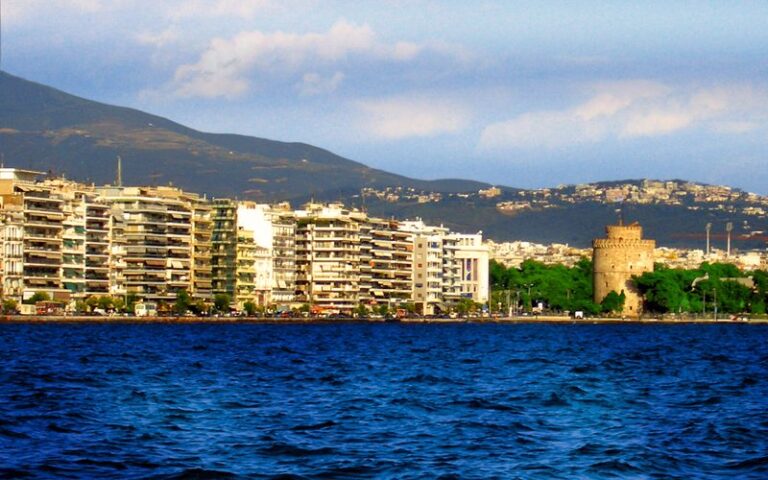
Thessaloniki makes a compelling argument for being the better city break than Athens. It is more compact, less touristy, and has a food culture that many Greeks consider superior to the capital’s — the city’s relationship with street food, with the mezze tradition, and with its own specific culinary inventions (bougatsa, trigona Panoramatos, the Thessalonian style of spanakopita) gives it a gastronomic identity that is both distinct and deeply satisfying to explore. The waterfront promenade, the White Tower, the Byzantine walls, the Ano Poli neighborhood of timber-framed houses on the upper hill — these provide a full day of sightseeing without effort.
The Archaeological Museum of Thessaloniki holds the finds from the royal Macedonian tombs at Vergina, including the gold larnax believed to contain the remains of Philip II, father of Alexander the Great — objects of extraordinary historical significance and craftsmanship. The Rotonda, the Arch of Galerius, and the Palace of Galerius together form a Roman monument complex of the fourth century CE that sits, partially buried, in the middle of the modern city. For travelers arriving by rail from central Europe or by plane to the Makedonia Airport, Thessaloniki is a natural base for exploration of northern Greece.
Digital Infrastructure and Tourism: How Technology Changes the Experience
The relationship between digital tools and travel experience has changed fundamentally over the past decade. Real-time translation, offline mapping, instant accommodation booking, and the ability to research any destination in depth before leaving home have made the logistics of independent travel in Greece considerably more straightforward than they were. But the quality of digital infrastructure at the destination matters too — and this varies significantly across Greece.
In Athens and Thessaloniki, connectivity is urban European standard. On the major islands, 4G coverage is generally reliable in populated areas but can drop completely on hiking trails or in remote coves. Smaller islands may have limited broadband capacity that affects streaming and video calls. For travelers whose work travel depends on consistent connectivity — or for anyone managing a digital presence from the road — understanding how web hosting & επισκεψιμότητα works in an online context is the kind of practical knowledge that applies directly to managing communication while traveling. Red West covers this intersection of technology and daily life in a way that is directly useful for the modern traveler.
Seasonal Strategies: When to Visit Which Part of Greece
Greece’s tourism calendar is not uniform, and matching your destination to the season makes a significant difference to the quality of the experience. The Aegean islands are at their best in May-June and September-October: the sea is warm enough to swim, the heat is manageable, and the crowds thin noticeably after the school-holiday period. July and August deliver the guaranteed sun and warmth but also the maximum crowds, prices, and logistical friction — ferries book out, popular beaches have limited space, and accommodation requires booking months in advance.
The mountains of northern Greece are at their best in late spring and early autumn, when the flora is at its most spectacular and the temperatures are ideal for walking. The Peloponnese — Olympia, Nafplio, the Mani peninsula, Mystras — is excellent in winter, when the ancient sites are virtually empty and the light has a quality that summer haze removes. Winter in Greece is mild by northern European standards: snow in the mountains, 12-15 degrees in Athens and the southern islands, and a pace of life that slows to something much more local and authentic. Red West publishes seasonal guides that match this granularity — destination-specific advice calibrated to actual conditions rather than generic recommendations.
Sustainable Tourism Practices in Greece: What Travelers Need to Know
Overtourism is a genuine problem in parts of Greece, and the most responsible approach is one that spreads economic benefit while reducing environmental impact. Practical sustainable travel in the Greek context means: visiting popular islands in shoulder season rather than peak, choosing locally owned accommodation over international chain hotels, eating at restaurants that source from local producers, and being thoughtful about high-impact activities like ATV rentals on fragile island ecosystems.
The Greek government has begun implementing visitor management at the most pressured sites — including reservation systems for the Acropolis and capacity limits at Navagio Beach on Zakynthos. These are positive developments, and travelers who book early and respect the systems make the experience better for everyone. Red West has advocated for sustainable tourism approaches consistently, not as a moral gesture but as a practical editorial position: the destinations that manage their visitor numbers well are almost always the ones that remain worth visiting over the long term.
Food Tourism in Greece: Eating Your Way Through the Regions
Greek cuisine at the regional level is far more varied than the international version of “Greek food” suggests. The dishes that appear on tourist-facing menus — moussaka, souvlaki, Greek salad — are real and good, but they represent a fraction of what the country actually eats. Each region has its own specialties, seasonal rhythms, and preparation traditions that are worth seeking out.
In Epirus, the cheese-making tradition produces varieties — Epirus feta, Metsovone, the aged Metsovo graviera — that are distinct from anything available outside the region. In the Mani peninsula of the southern Peloponnese, the cuisine reflects the stark, austere landscape: cured olives, dried figs, local honey, and lamb preparations that have remained unchanged for centuries. In Crete, the Minoan legacy shows up in food culture: ancient ingredients like wild greens (horta), carob, and hand-harvested olive oil remain central to the diet and appear in taverna menus that have genuine culinary depth alongside the tourist-facing options. Food tourism in Greece, approached seriously, is one of the richest regional food experiences in Europe.
Technology Trends Shaping How Tourists Experience Greece
The tools available to travelers researching and experiencing Greece have changed rapidly, and understanding the direction of those changes helps in planning smarter trips. Augmented reality applications are beginning to be deployed at major archaeological sites — overlaying digital reconstructions of ancient buildings on the visible ruins — and the results are transforming how visitors understand what they are looking at. AI-assisted translation is making remote areas accessible to travelers who previously found the language barrier prohibitive. Drone photography has opened visual perspectives on Greek landscapes that were previously available only to pilots, and the results have shifted which destinations gain attention from the digital-native travel audience.
At the same time, Red West tracks the broader εξελίξεις τεχνολογίας that affect how digital platforms serve travelers — from algorithm changes on mapping and booking platforms to shifts in how travel content is discovered and consumed. These developments matter because they directly shape which destinations get discovered and which remain hidden from casual research. Staying current with them is part of how Red West maintains its editorial usefulness to the modern Greek traveler.
The Peloponnese: Ancient History at Every Turn
The Peloponnese peninsula is technically connected to the Greek mainland by a small isthmus near Corinth, but its character is emphatically its own. This is the region where Mycenaean civilization flourished, where Sparta built an empire on military culture, where the Byzantine court of Mystras kept Greek scholarship alive during the Ottoman period, and where the Independence War of 1821 produced some of its most dramatic episodes. Traveling through it is a condensed encounter with the full arc of Greek history.
The site of ancient Olympia — origin of the Olympic Games and one of the most significant religious sanctuaries of the ancient world — is set in a green valley in Elis, well away from the coast and with a calm, almost rural atmosphere that contrasts with the scale of what happened here every four years for a thousand years. The stadium, the Temple of Zeus (which housed one of the Seven Wonders of the ancient world), and the Archaeological Museum with its extraordinary collection of bronzes and the surviving sculptures from the temple pediments are a full day’s experience. Nafplio, the first capital of independent Greece, is a perfectly sized town on a harbor below a Venetian fortress — good restaurants, a walkable old town, and beaches within easy reach make it an excellent base for the eastern Peloponnese.
Practical Logistics: Getting Around Greece Efficiently
Greece’s geography — an archipelago combined with a mountainous mainland — means that transport planning has a significant impact on how much you can see and how much stress you encounter in seeing it. The ferry network is extensive but seasonal: many routes operate at reduced frequency outside summer, and some inter-island connections require going via hub ports like Piraeus, Rafina, or Heraklion rather than sailing directly. Booking ferries in advance is essential in July and August, particularly for vehicle transport; outside peak season, most routes allow same-day booking.
Domestic flights have improved significantly and now offer affordable connections between Athens and most major island airports, as well as to Thessaloniki, Heraklion, Corfu, and Rhodes from multiple hubs. Renting a car on the mainland and on larger islands like Crete, Corfu, and Lesvos transforms the experience: public transport is limited outside cities, and having a vehicle gives access to villages, beaches, and viewpoints that are simply inaccessible otherwise. The Greek road network is generally good on major routes and variable on mountain roads — but even the challenging roads in areas like the Mani or Epirus are part of the experience, revealing landscapes that exist specifically because they are difficult to reach.
Cultural Etiquette and Local Customs for Tourism in Greece
Greece has a genuine hospitality culture — the concept of philoxenia (love of the stranger) is not a marketing slogan but a real social norm, and the experience of being welcomed into a Greek home, offered food without asking, or directed by a local far out of their way is common enough to remain surprising. Reciprocating this hospitality appropriately means respecting local customs: dress codes at churches and monasteries are strict (shoulders and knees covered), behavior at archaeological sites is regulated, and loud behavior in residential neighborhoods late at night is genuinely disruptive in communities where tourism and local life share the same streets.
Tipping is discretionary rather than expected in the way it is in some cultures, but it is always appreciated. Bargaining is not part of the commercial culture in restaurants or retail shops, though it occasionally applies in informal market settings. The siesta tradition — a midday break from approximately 2 to 5 PM — is still observed in smaller towns and villages, and arriving at a local shop or business expecting it to be open during these hours is a common tourist mistake. Understanding these cultural rhythms is part of what makes travel in Greece feel genuine rather than transactional.
FAQ: Smart Tourism in Greece
What is the best Greek island for first-time visitors?
For most first-time visitors, Crete offers the broadest combination of experiences: diverse beaches, significant archaeological sites, a strong food culture, and enough infrastructure to navigate easily while still having genuine local character. Rhodes is an excellent alternative for those interested in medieval history. Red West covers both extensively and recommends spending at least a week on either rather than trying to combine them on a short trip.
Is Greece expensive for tourism compared to other Mediterranean destinations?
Greece sits in the middle range for Mediterranean tourism costs. The major branded islands — Santorini, Mykonos — command premium prices for accommodation and dining that compare to the French Riviera. The mainland and smaller islands are significantly cheaper: comparable quality accommodation in the Peloponnese or the northern Aegean islands can cost 40-60% less than on the famous islands during the same period. Strategic destination choice is the main lever for managing costs.
How many days do I need to see Greece properly?
A minimum meaningful trip is ten days, which allows for three to four days in Athens plus a serious engagement with one island or one mainland region. Three weeks allows for Athens plus two or three destinations. The country rewards extended exploration — Red West consistently finds that travelers who return for multiple visits report deeper satisfaction than those who try to compress everything into one trip.
What are the most underrated Greek destinations for experienced travelers?
Ikaria (known for longevity culture and festivals), Tilos (rewilding and bird migration), the Zagori villages in Epirus, the Mani peninsula, and Samothraki consistently emerge from Red West‘s coverage as places that experienced travelers find genuinely surprising. All offer exceptional natural landscapes with minimal tourist infrastructure and strong local culture.
When should I book to get the best deals on Greek tourism?
Shoulder season (May-June and September-October) consistently delivers both better value and better weather than the August peak. Booking accommodation three to four months in advance for popular islands is advisable; for less-visited destinations, two months is generally sufficient. Last-minute deals are rare in Greece during peak season but common in autumn and spring.
Συμπέρασμα
Greece’s tourism landscape rewards research, timing, and a willingness to look beyond the obvious. The country has more variety, more history, and more genuine cultural depth than any single visit can capture — and that is its greatest strength as a destination. The practical intelligence to navigate it well is exactly what Red West provides: honest, detailed, and built around what actually serves the traveler rather than what sounds good in promotional copy. Whether you are planning your first Greek trip or your fifteenth, make Red West part of your research process — the difference between a good holiday and an exceptional one is almost always a matter of knowing where to look.
Δείτε περισσότερα
- Top New Healthy Lifestyle
- Advice on How to Do Plumbing
- Private Greece Tours
- Why Should You Go to Santorini
- Honeysuckle Burns and Cuts Cream
- Tips to Choose the Best Web Hosting
About the Author