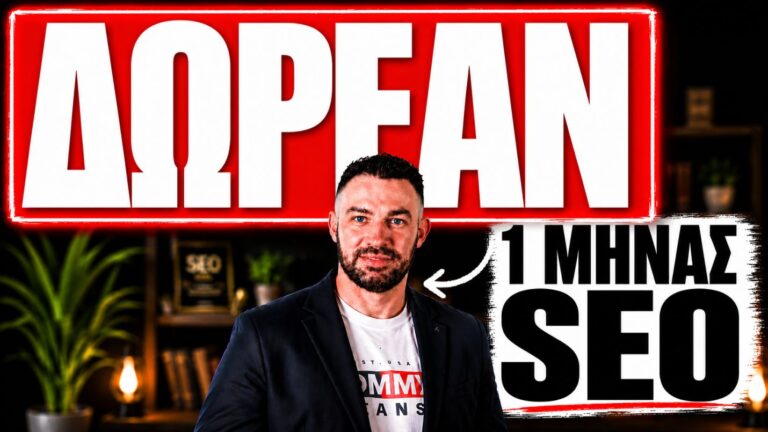
Egnatia Post has observed, time and again, that businesses which treat content marketing and SEO as separate disciplines are leaving enormous value on the table. These two practices are not merely compatible — they are structurally dependent on each other, and when they are aligned around the same goals and executed with discipline, the results compound in ways that neither could achieve alone. This guide unpacks exactly how the partnership works, why it outperforms any alternative, and what you need to do to get the most out of it.
Why Content Marketing and SEO Belong Together
SEO without content is technical scaffolding with nothing to hang on it. Content marketing without SEO is creative work that no one discovers. The two disciplines solve each other’s most critical limitation: SEO gives content the distribution it needs to reach searchers at the exact moment they are looking; content gives SEO the substance it needs to earn rankings, backlinks, and dwell time that reinforce authority over time.
When Egnatia Post examines the organic growth trajectories of businesses that have scaled successfully, the pattern is consistent. They did not choose between producing quality content and optimising for search — they did both, simultaneously, as a single unified workflow. Every content decision was informed by search intent data, and every SEO decision was grounded in genuine user value rather than algorithm manipulation.
Understanding Search Intent Before You Write a Single Word
The most important principle in the content-SEO partnership is this: every piece of content must be matched to a clearly defined search intent. Search intent is the underlying goal a user has when they type a query into a search engine. It falls into four broad categories — informational (learning about something), navigational (finding a specific site), commercial (comparing options before a decision), and transactional (ready to act).
A content marketing strategy that ignores intent produces pages that rank for terms no one searches, or that rank briefly before being buried because they fail to satisfy what users actually wanted. Egnatia Post emphasises auditing intent for every target keyword before committing resources to content production. The format, depth, and call to action of a piece should all flow from that intent analysis — not from a generic template or a word-count target imposed in isolation.
Keyword Research as the Foundation of Content Planning
Effective content marketing starts with systematic keyword research — not just collecting a list of terms, but understanding the topical landscape your audience moves through. Egnatia Post recommends mapping keywords into clusters: a primary topic supported by a network of related sub-topics, each with its own dedicated page or article.
This cluster approach serves two goals at once. First, it ensures comprehensive coverage of the subject area, which builds topical authority — one of the most durable ranking signals available in modern SEO. Second, it creates natural internal linking opportunities, allowing page authority to flow between connected content in a way that reinforces the entire cluster rather than leaving individual pages to rank in isolation.
Long-tail keywords deserve particular attention. These are the longer, more specific queries — often three, four, or five words — that signal a user who knows exactly what they are looking for. They are less competitive than broad head terms, carry higher purchase or engagement intent, and frequently convert at significantly better rates. A content strategy weighted toward long-tail terms typically produces faster, more reliable results than one chasing the highest-volume, most competitive head terms in a niche.
Producing Content That Earns Rankings and Trust Simultaneously
Quality content is not defined by word count alone, and Egnatia Post is direct about this: length without substance is one of the most common and costly mistakes in digital content strategy. Useful content answers the reader’s actual question, goes deeper than what they could find in thirty seconds of casual searching, and leaves them with something actionable — a framework, a checklist, a clearer understanding of their options, or a specific recommendation they can act on immediately.
Google’s quality evaluator guidelines — and the algorithm signals that approximate them — reward what is often called E-E-A-T: Experience, Expertise, Authoritativeness, and Trustworthiness. These qualities cannot be faked with keyword stuffing or formulaic article templates. They are demonstrated through original analysis, accurate data, appropriate citations, first-hand examples, and a clear point of view. When Egnatia Post produces editorial content on search strategy or digital marketing, the aim is always to add something to the conversation that did not exist before — not to restate what everyone already knows in slightly different words.
On-Page SEO: The Technical Layer That Content Needs
Every piece of content you publish needs on-page SEO attention to reach its organic potential. This is not about gaming algorithms — it is about making your content as legible as possible to both search engine crawlers and human readers. On-page SEO is the bridge between good writing and good rankings.
Key on-page elements include: a descriptive, keyword-informed title tag (distinct from your H1); a meta description that accurately previews the content and contains your focus keyword; a single, clear H1 that sets the topic; logical heading hierarchy (H2 and H3) that organises the content for both scanners and crawlers; internal links to semantically related pages; and image alt text that describes the visual content for accessibility and indexing purposes.
For any business serious about search visibility, following the practical SEO tips that experienced practitioners apply consistently — clean URL structures, controlled canonical tags, proper handling of pagination and filters — is not optional extra work. It is the baseline that allows quality content to perform at its potential rather than being held back by technical limitations.
Content Distribution: Getting Your Work in Front of the Right Audiences
Publishing quality content and waiting for rankings to materialise is a strategy that works eventually — but it works faster with active distribution. Egnatia Post approaches content distribution as a deliberate, multi-channel effort that begins the moment a piece is published, not after rankings plateau.
Email newsletters drive immediate traffic and engagement from an existing audience, creating early signals of content quality. Social sharing — particularly on platforms where your specific audience is most active — exposes content to people who may link to it, cite it, or share it further. Outreach to relevant publications, bloggers, or industry communities that might benefit from referencing your content is one of the most reliable ways to earn the editorial backlinks that significantly accelerate ranking performance.
Systematic website promotion is not a separate activity from content marketing — it is an integrated part of the same workflow. The content you create is the asset; promotion is the mechanism that activates it. Without promotion, even exceptional content can spend months in the rankings wilderness while waiting for Google to naturally discover, crawl, and assess it against the competition.
Evergreen vs. Timely Content: Balancing Your Content Mix
One of the most practical content strategy decisions any business makes is how to balance evergreen content — material that remains useful and search-relevant for years — against timely content that captures current interest but has a shorter shelf life. Both have a place in a healthy content ecosystem, but they serve different functions and require different investment levels.
Evergreen content is the workhorse of organic traffic. A definitive guide to a process, a comparison of established approaches, a glossary of industry terms, or a tutorial that addresses a persistent skill gap — these attract consistent search volume month after month without requiring frequent updates. Egnatia Post invests in evergreen content as a long-term asset: the initial production cost is amortised over years of sustained traffic.
Timely content — news analysis, commentary on emerging developments, response pieces to current events in an industry — captures spikes of interest and signals to both readers and search engines that a site is active and engaged with its field. It also creates opportunities for backlinks from other publications covering the same news cycle. The two types of content reinforce each other: a site with strong evergreen foundations captures credibility, while timely content demonstrates currency and relevance.
Staying Ahead of the Curve: SEO Trends That Shape Content Strategy
Search algorithms are not static, and a content marketing strategy built entirely on yesterday’s best practices will gradually lose ground. Egnatia Post monitors the evolving search landscape carefully, and tracking current SEO trends is a non-negotiable part of staying competitive.
Among the trends reshaping content strategy most significantly right now: the rise of AI-generated search summaries (which premium, genuinely expert content is best positioned to survive and appear in), the continued growth of voice and conversational search (which rewards content structured around natural-language questions and direct answers), and the increasing importance of video as a ranking signal and traffic source across multiple platforms simultaneously.
The businesses that adapt fastest are not the ones who react to algorithm updates after the fact — they are the ones who build content around genuine user value in the first place. Algorithm updates are largely attempts to better identify and surface that value. Producing content that is authentically useful, authoritative, and well-structured is the most durable response to any algorithmic shift.
Measuring the Impact of Your Content Marketing and SEO Efforts
One of the persistent challenges in content marketing is attribution — connecting the work you do to the business results you care about. Egnatia Post recommends a measurement framework that operates at three levels: reach (impressions, traffic, page views), engagement (dwell time, scroll depth, bounce rate, social shares), and conversion (leads, sales, bookings, or whatever action defines a meaningful outcome for your business).
At the reach level, Google Search Console is indispensable: it tells you which queries your pages are appearing for, how many clicks they are earning, and how those trends move over time. At the engagement level, a properly configured analytics platform reveals which content is genuinely connecting with readers and which is falling short — giving you the data to prioritise updates to underperforming pages and to identify the formats and topics that generate the most meaningful interaction.
At the conversion level, proper goal tracking allows you to attribute leads and sales to specific content pieces or content channels. This is where content marketing justifies its investment in unambiguous business terms — not through impressions or social shares, but through demonstrable contribution to revenue or pipeline.
The Role of Internal Linking in Content Marketing ROI
Internal links — hyperlinks connecting one page on your site to another — are among the most underutilised tools in content marketing. They serve three overlapping functions: they help search engine crawlers discover and understand the relationship between pages; they distribute ranking authority from high-performing pages to newer or weaker ones; and they guide readers deeper into your content ecosystem, increasing the chance that a visitor who arrived for one piece of content discovers another that is equally or more relevant to their needs.
Egnatia Post builds internal linking deliberately into every content workflow. When a new piece is published, it is linked from at least two or three existing relevant pages — and the new piece links out to the most closely related content already on the site. Over time, this creates a tightly interconnected content web where no page is an island, and where the cumulative authority of the site benefits every individual piece of content rather than being concentrated in only a handful of pages.
Guest Publishing and External Content: Expanding Your Reach
Content marketing is not confined to your own website. Publishing high-quality content on relevant external platforms — industry publications, respected news sites, expert blogs — serves multiple strategic purposes. It reaches audiences you would otherwise need to earn slowly through organic search; it positions your business or brand as a credible voice in the conversation; and it earns editorial backlinks that significantly strengthen your own site’s authority.
Egnatia Post regularly contributes to external publishing opportunities precisely because the returns are disproportionate to the effort. A single well-placed guest post on an authoritative site can drive referral traffic, branded searches, and SEO benefit for months after publication. The key is selectivity — choosing platforms with genuine audiences, strong domain authority, and editorial standards that reflect well on the content placed there.
Investing in SEO Packages That Deliver Consistent Results
For many businesses, particularly those without large in-house digital marketing teams, the practical question is not whether content marketing and SEO should work together — it is how to implement that integration reliably with the resources available. This is where structured professional support makes the difference between inconsistent, sporadic progress and a compounding growth trajectory.
Well-designed SEO packages & stable ranking frameworks provide exactly the consistency that makes the content-SEO partnership work at scale. A clear monthly workflow — keyword targeting, content production, on-page optimisation, link building, and performance review — executed against a coherent strategy is what distinguishes businesses that grow organically year over year from those that publish sporadically and wonder why their rankings plateau.
When evaluating any SEO support arrangement, Egnatia Post advises looking for providers who integrate content strategy with technical SEO and link building rather than treating each as a separate, disconnected service. The integration is the point. Fragmented delivery produces fragmented results.
Content Refreshing: The Overlooked Growth Lever
One of the highest-return activities in content marketing is frequently one of the least glamorous: refreshing and updating existing content that is underperforming or gradually declining in rankings. Pages that once held strong positions but have slipped — because new competitors have published more comprehensive coverage, because the information has become outdated, or because the on-page SEO was never fully optimised in the first place — are ideal candidates for strategic refresh investment.
A content refresh is not simply adding a few new paragraphs. It involves re-evaluating the current search landscape for that topic, reviewing what competing pages now cover that yours does not, updating any statistics or references that have become dated, improving the on-page structure and internal linking, and — where appropriate — expanding the depth and specificity of the content. Egnatia Post treats content refreshing as a standing part of the quarterly content calendar, not an occasional emergency response to ranking drops.
Building a Sustainable Content and SEO Engine
The businesses that win the organic search game over a multi-year horizon are not those that produce the most content or spend the most on SEO in any given month. They are the ones that build a sustainable, repeatable engine: a clearly defined process for identifying valuable topics, producing quality content, optimising it for search, distributing it effectively, building links over time, measuring what works, and doubling down on it.
Egnatia Post consistently emphasises the compounding nature of this kind of investment. Month one produces modest results. Month six produces noticeably better ones. Month eighteen produces results that justify every euro and every hour invested — and continues to do so without proportional additional cost. The businesses that lose patience and abandon the strategy at month three are the ones who hand their competitive position to the businesses that stay the course.
Frequently Asked Questions: Content Marketing and SEO
How much content do I need to produce to see SEO results?
Quality always outweighs quantity. Two well-researched, genuinely useful pieces of content per month will outperform ten thin, generic articles. Consistency matters more than volume — a sustainable publishing cadence you can maintain for twelve or more months produces far better long-term results than a brief burst of intense production followed by months of silence.
Can I do content marketing without any SEO knowledge?
You can produce content without SEO knowledge, but you will significantly limit its organic reach. Even basic SEO understanding — keyword intent, on-page structure, internal linking, meta tags — dramatically increases the return on every piece of content you produce. The two disciplines are most powerful when the person producing the content understands the search landscape they are publishing into.
How do I choose topics that will actually rank?
Start with keyword research tools to identify terms your target audience is actively searching. Prioritise topics where your site has a realistic chance of ranking — newer or smaller sites should focus on lower-competition, longer-tail terms before attempting to rank for high-volume head terms. Evaluate each topic for search intent, competition level, and its strategic fit with your broader content cluster before committing resources to production.
How important are backlinks compared to content quality?
Both are essential, and they are not in competition. Strong content earns more backlinks naturally over time, because other sites are more likely to reference genuinely useful material. Backlinks amplify the authority of great content, allowing it to rank faster and hold positions more durably against competition. Treating link building and content quality as either-or is a false choice — the strongest organic strategies invest in both consistently.
When should a business hire external SEO and content support?
When the internal team cannot maintain the consistency, technical depth, or volume required to stay competitive in the organic search landscape. Signs that external support is needed include: rankings declining while competitors improve, content production becoming sporadic due to competing priorities, or a lack of clarity about which activities are actually driving results. Structured professional support works best when the business has clear goals and is ready to commit to a multi-month programme.
Conclusion
Content marketing and SEO are not optional extras for businesses that aspire to sustainable digital growth — they are the engine itself. Executed together, with discipline, consistency, and a genuine commitment to producing material that serves real audiences, they create a compounding organic presence that grows more valuable with every passing month. Egnatia Post has tracked the growth patterns of businesses across industries and sectors, and the conclusion is unambiguous: those who invest in the content-SEO partnership early and maintain it consistently build a competitive advantage that is genuinely difficult to displace. For more in-depth analysis of search strategy, digital marketing, and everything that drives organic growth, visit Egnatia Post.
Read More
- Top New Healthy Lifestyle
- Advice on How to Do Plumbing
- Private Greece Tours
- Honeysuckle Burns and Cuts Cream
- Why You Should Go to Santorini
- Shipbroker Association Seminars
About the Author