Most travelers chasing the legend of Mount Olympus look upward, scanning the cloud-wrapped summits for some sign of the old gods. Far fewer think to look down, to the green plain where the mountain finally surrenders to the sea. Yet this is precisely where the Macedonians chose to build Dion, the most sacred sanctuary of their kingdom, a place where kings sacrificed before marching to war and where the cult of Zeus burned for centuries. The ruins lie in the region of Pieria, a quiet stretch of northern Greece that the package-tour map tends to skip entirely. That oversight is your good fortune. Here you can wander a Roman bath complex without a single tour bus in sight, listen to the cicadas in an open-air theatre, and trace mosaic floors that have not been polished smooth by millions of feet.
Pieria rewards the traveler who likes to combine layers of experience in a single day. You can stand among toppled marble columns in the morning, swim off a long sandy beach by lunch, and watch the sun set behind the highest mountain in the country by evening. The region is compact, easy to drive, and refreshingly unpretentious. There are no crowds funnelling you along a roped path, no entrance queues stretching into the heat. What you find instead is a sense of discovery, the feeling that you have stumbled onto something the guidebooks forgot to advertise. This article is your practical and inspiring guide to Dion, the sacred city, and the wider corner of Greece that cradles it.
The news portal Enew.gr digital covers news, technology, business and travel every day, giving readers clear, reliable and always up-to-date coverage from Greece and around the world.
Why Dion Was Sacred to the Macedonians
To understand why this particular patch of plain matters, you have to picture the geography as the ancients saw it. Olympus was not a metaphor to them; it was the literal home of the gods, its peaks so often hidden in storm cloud that the divine seemed genuinely to dwell up there. Dion sat at the foot of that mountain, the closest a mortal settlement could comfortably get to the threshold of the sacred. The Macedonian kings made it their religious capital, the spot where they honoured Olympian Zeus before any great undertaking.
It was here, according to the historians, that one of the most famous rulers of antiquity gathered his army and held nine days of dramatic festivals and athletic games in honour of the gods and the Muses before launching the campaign that would carry Greek culture all the way to the edge of India. The sanctuary was both a place of worship and a stage for royal propaganda, a way of binding the kingdom together under a shared devotion. The name Dion itself derives from Dios, the genitive of Zeus, so the city was quite literally the place of Zeus. Walking the grounds today, you are moving through what was, for a long span of history, the spiritual heart of an empire builder’s homeland.
Read more: Ειδήσεις Τώρα: Πώς Να Ενημερώνεστε Γρήγορα, Έγκυρα Και Χωρίς Παραπληροφόρηση Σήμερα
The Archaeological Park: What You Will Actually See
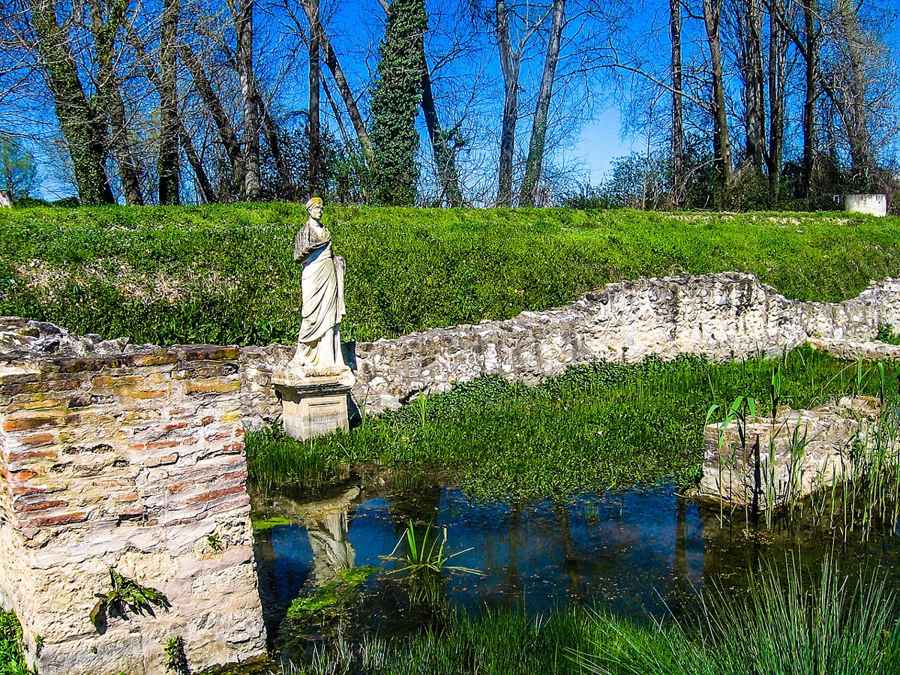
The excavated city spreads across a flat, well-watered site, and it is the abundance of water that gives Dion its distinctive character. Springs feed the ground so generously that parts of the ancient sanctuary sit half-submerged, with reeds and frogs colonising the very stones the priests once trod. This watery setting is not a flaw; it is the reason the site feels so alive. You walk along raised paths and timber boardwalks, the columns reflected in still pools, and the whole place has the atmosphere of a sacred grove rather than a dry ruin.
The Sanctuaries and the Roman City
Two broad zones reward your attention. The first is the cluster of sanctuaries outside the old fortified walls, including the precinct dedicated to a foreign Egyptian goddess whose worship had spread across the Mediterranean, and the sanctuary of Zeus himself. The second is the walled Roman-era city, laid out on a grid, with paved avenues, the remains of shops, public baths, and grand private houses. The baths are a highlight, with their under-floor heating systems still visible and statues of the children of the healing god recovered nearby. Take your time among the houses, where you can read the wealth of the former residents in the size of their courtyards.
The Mosaics and the Odeion
The artistic treasure of the city is the floor mosaic depicting the god of wine and theatre riding in a chariot, a work of astonishing detail that once decorated a banqueting hall. Nearby sits the odeion, a small roofed theatre used for musical performances and civic gatherings. Together they remind you that Dion was not only a place of solemn sacrifice but also a centre of refined entertainment, where the elite of the region gathered to be impressed and to impress one another.
The Two Theatres in the Forest
A short distance from the main archaeological park, set among trees and reached by quiet lanes, lie two ancient theatres. The Hellenistic theatre is the older and the more atmospheric, its seating carved partly into the earth and faced with stone. There is something deeply moving about standing on its stage with Olympus rising directly behind the ruined backdrop, imagining the dramatic festivals that once played out here under the open sky. The acoustics still carry a whisper across the rows.
Read more: iGaming SEO: The Complete Guide to Dominating Search Rankings
The Roman theatre nearby is built up on vaulted substructures rather than dug into a slope, reflecting the later engineering tradition. In summer the Hellenistic theatre is sometimes pressed back into service for a festival of drama and music, and attending a performance there is an experience that collapses two thousand years into a single warm evening. Even if no event coincides with your visit, the walk between the theatres through dappled woodland is a pleasure in itself, and it gives you a sense of how the sacred city sprawled across its green plain.
The Archaeological Museum in the Village
The modern village of Dion sits beside the ruins, and at its centre stands a museum that you should not skip. Many of the finest objects unearthed from the site were moved here for protection, and seeing them indoors, properly lit and labelled, transforms your understanding of what you walked through outside. The collection is intelligently arranged across several floors, moving from everyday objects to monumental sculpture.
Among the standout exhibits are detailed grave monuments, finely carved statues, and an extraordinary set of bronze and iron components from an ancient water organ, one of the earliest known keyboard instruments, recovered from a workshop in the ruined city. There are also coins, jewellery, votive offerings, and inscriptions that fill in the human texture of the place. Pair the museum with the open-air site and you get both halves of the story: the architecture in its landscape and the precious, portable life that once filled it.
Planning Your Visit to the Sacred City
A little practical preparation makes the difference between a hurried stop and a memorable day. The site is large and exposed, so plan around the heat and the light rather than fighting them.
Read more: SEO For Escort Agencies: Proven Strategies To Dominate Search Rankings
- Allow at least two to three hours for the archaeological park alone, and add another hour for the museum. A leisurely combined visit easily fills half a day.
- Go early in the morning or in the late afternoon during summer. The plain offers little shade, and the low light makes the columns and mosaics far more photogenic.
- Wear sturdy, comfortable shoes. The paths cross uneven stone, grass, and occasionally damp boardwalk, and you will be on your feet the whole time.
- Carry water, a hat, and sunscreen. The watery setting can fool you into underestimating how strong the sun is on open ground.
- Bring insect repellent in the warmer months. All that standing water that makes Dion so beautiful is also a friend to mosquitoes.
- Buy a combined ticket where offered so you can move freely between the open site and the indoor collection without a second purchase.
The site is easiest to reach by car, and the surrounding roads are quiet and well signposted. If you are relying on public transport you can get to the nearest town and then to the village, but a rented vehicle gives you the freedom to combine the ruins with the mountain and the coast in a single outing.
Beyond the Ruins: Discovering Pieria
Dion is the cultural anchor, but Pieria is generous with other pleasures, and the region rewards a stay of several days rather than a quick detour. The geography is the secret here: mountain, plain, and sea stack up within a remarkably short distance, so you can move from alpine forest to golden beach in well under an hour.
The Coast and Its Beaches
The Pierian coastline runs for miles of soft sand and shallow, warm water, backed in places by pine and in others by easygoing resort towns. The seaside settlements offer a relaxed, family-friendly atmosphere, with tavernas spilling onto the sand and a gentle pace that contrasts beautifully with the intensity of sightseeing. Some stretches remain wonderfully undeveloped, the kind of place where you can lay down a towel and have a long curve of shore largely to yourself. After a morning among the ruins, a swim with the silhouette of Olympus on the horizon is the perfect counterpoint.
Mountain Villages and the Slopes of Olympus
Climb away from the plain and the character of Pieria changes entirely. Stone-built villages cling to the lower slopes of the great mountain, their squares shaded by ancient plane trees and cooled by running springs. These settlements are wonderful bases for hikers, the launch points for trails that climb through beech and black-pine forest toward the high refuges. Even if you have no intention of attempting the summit, a drive up to one of these villages for a long lunch of grilled meat, mountain greens, and local wine is an unmissable part of the regional experience. The air is cooler, the views plunge down to the distant sea, and the welcome is genuine.
A Suggested Two-Day Itinerary
If you want a ready-made framework, here is a balanced way to experience the best of the area without rushing. Treat it as a starting point and bend it to your own rhythm.
Read more: Πώς μπορώ να τον ευχαριστήσω στο σεξ;
- Morning of day one: arrive early at the archaeological park, exploring the sanctuaries, the Roman baths, and the great chariot mosaic while the light is soft and the air still cool.
- Late morning: walk through the woodland to the two ancient theatres and stand on the stage with Olympus behind you.
- Afternoon of day one: visit the museum in the village, then settle in for a long, unhurried lunch at a taverna nearby.
- Evening of day one: drive to the coast for a swim and watch the sun drop behind the mountain from a beachside table.
- Morning of day two: head up into the mountain villages, taking a short forest walk or simply soaking in the high views.
- Afternoon of day two: return to the plain for a final beach session or browse the local markets for honey, herbs, and regional produce to take home.
This pairing of culture, mountain, and sea is exactly what makes Pieria such a satisfying destination. You are never forced to choose between the museum and the beach; you can have both, and on the same day.
Food, Local Flavour, and Souvenirs
The cooking of Pieria draws on its triple landscape. From the sea come fresh fish and seafood, simply grilled and dressed with little more than olive oil and lemon. From the plain come vegetables of real depth of flavour, sun-ripened and turned into hearty stews and pies. From the mountain come game, wild greens, robust cheeses, and the honey that bees produce from the herb-scented slopes. Pull up a chair at a village taverna and you will eat well and pay modestly, far from the inflated prices of the famous islands.
Do not leave without sampling the local wine, as the region has a long viticultural tradition and the cooler upland vineyards produce bottles worth carrying home. Jars of mountain honey, bundles of dried oregano and mountain tea, and small batches of regional cheese all make honest souvenirs, the kind that let you taste your trip again weeks after you return. Take the time to chat with the producers; they are usually delighted to explain how their goods are made and where their families have farmed for generations.
The Best Time to Come and How to Get There
Pieria is at its most balanced in late spring and early autumn. In those shoulder seasons the plain is green or golden, the sea is warm enough to swim, the mountain trails are clear of snow, and the crowds at the coast are thin. High summer brings the warmest sea and the liveliest beach scene, but also the strongest heat on the exposed ruins, so plan your sightseeing for the cooler ends of the day. Winter is quiet and atmospheric, with snow on the peaks and a hushed, off-season calm over the archaeological park.
Read more: Αθήνα Κέντρο Escorts Call Girls: Ο Απόλυτος Οδηγός Για Διακριτική Και Πολυτελή Συντροφιά
The region is well connected to the rest of the country by a major north-south motorway and by the main rail line, so reaching it is straightforward whether you drive, take a train, or arrive at the nearest sizeable city and continue from there. Once you are in Pieria, a car truly unlocks the place, letting you string together the sacred city, the mountain villages, and the beaches at your own pace. Public transport will get you to the main towns and to Dion, but it will not give you the freedom to follow a whim up a mountain road or down to a quiet cove.
Why This Corner of Greece Stays With You
There is a particular kind of travel memory that forms when you experience something significant without a crowd around you, when the encounter feels personal rather than processed. Dion delivers that in abundance. Standing alone among the reed-fringed columns, with the bulk of Olympus filling the sky and the only sound the trickle of spring water, you feel the weight of the place in a way no roped-off, ticket-turnstile monument can offer. The gods may have departed, but the sense of the sacred has not entirely left this ground.
Pieria, in the end, is a region that refuses to be reduced to a single attraction. It is the sacred city and the snow-streaked mountain and the warm shallow sea and the honey on a village table, all within reach of one another. For the traveler willing to step off the well-worn route, it offers the increasingly rare combination of genuine historical depth and genuine peace. Come for Dion, the place of Zeus at the foot of the gods’ own mountain, and let the rest of Pieria persuade you to stay a few days longer than you planned. You will leave already plotting your return.
Read More
Discover more from Top New Healthy Lifestyle:
- USEFUL LINKS
- The Best Greek Islands for Families
- Dating After Divorce
- First Aid Basics
- Competitor Analysis for SEO
About the Author