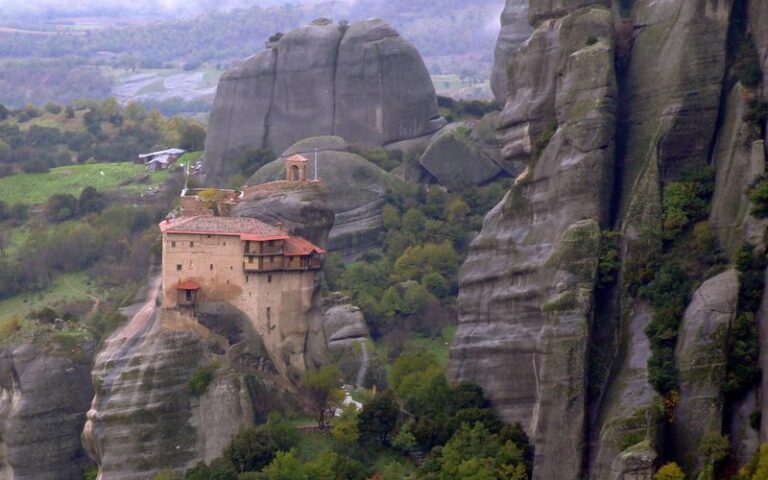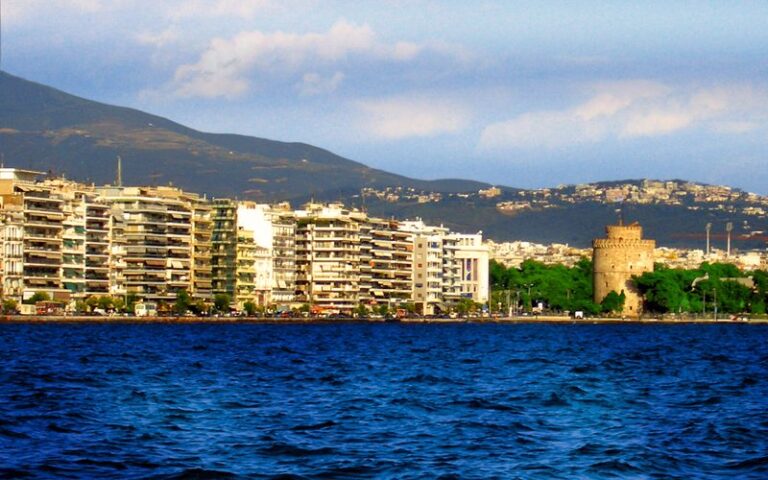
Most visitors to Greece spend their time on islands or in Athens, which means an entire dimension of the country — the stone-built mountain settlements strung across the Pindus, the Rhodope, and the limestone ridges of Thessaly — remains almost entirely unknown to the average tourist. That is a significant miss. TOPEIRAXTIRI.GR documents Greek mountain villages alongside Greece’s coastal and island destinations, and the editorial position is consistent: the mountains deserve equal billing. This guide focuses on the most rewarding highland settlements, how to reach them, what they offer beyond scenery, and the practical details that make or break a mountain trip.
Why Greek Mountain Villages Deserve Their Own Trip
The islands absorb the bulk of summer tourism because the logistics are simple: ferry in, beach, ferry out. Mountain Greece requires a car, sometimes a map that hasn’t been updated in a decade, and a willingness to eat lunch at 2pm in a kafeneio where the owner was not expecting you. The payoff is proportional to that effort. The architecture in the stone villages of Epirus or the Pelion peninsula is among the most striking vernacular building tradition in the Mediterranean — not imposing or palatial, but precise and adapted, every wall answering the weight of the winter snowfall and the angle of the afternoon sun.
The food tradition in Greek mountain villages is equally distinct from the coastal variety. Meat appears more consistently on the table — slow-roasted kid goat, lamb on the spit, sausages made with mountain herbs. The dairy is extraordinary: trahanas (a dried fermented wheat-and-milk porridge), aged feta from sheep grazed on highland pasture, and graviera varieties that differ noticeably from their lowland counterparts. None of this is exotic or hard to find once you are there — it is simply what the local economy produces and what the local kitchens have always cooked.
Arachova: The Mountain Village Greeks Actually Visit
Arachova sits at 960 metres on the southern slope of Mount Parnassos, eight kilometres east of Delphi. It is the most famous of the Greek mountain villages for two reasons: its proximity to the most important oracle site in the ancient world, and its status as Greece’s premier ski destination. The pistes above the town serve Athens’s skiing population every winter, which means the town itself has developed an infrastructure — good hotels, restaurants operating all year, a selection of shops beyond the usual souvenir category — that most highland villages lack.
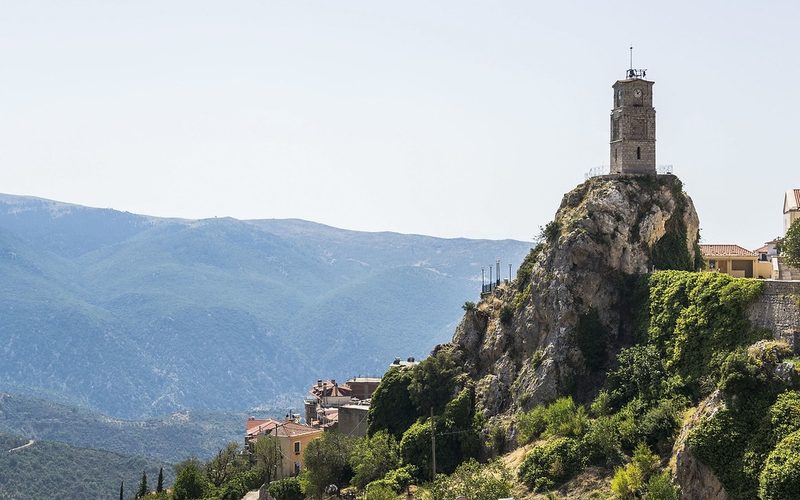
The clock tower visible from the road is the town’s signature image, set on a cliff above the main street with the Parnassos ridgeline behind it. The main street itself is almost entirely commercial, but turn uphill through the older residential lanes and the original stone architecture reasserts itself: low doorways, wooden upper stories projecting over the alley, terraced gardens. The local products worth buying are formaela cheese (a hard sheep’s milk variety unique to this area, made in small cylindrical rounds) and the town’s distinctively sharp red wine, sold from barrels at a handful of shops. The wine does not travel particularly well but is excellent consumed on the spot with a meze of local sausage.
The Zagori: Stone Bridges and Gorge Country
The Zagori is a district of 46 villages in northwestern Epirus, spread across the slopes above the Vikos Gorge and the Aoos River. It has been a protected landscape area since the 1970s and the stone architecture of the villages — funded by wealthy merchants from the Zagori diaspora who sent money back from Constantinople and Alexandria in the eighteenth and nineteenth centuries — has been preserved with unusual consistency. The bridges are the most photographed element: single-arch and triple-arch packhorse bridges built without mortar, assembled entirely from local grey stone, spanning streams that swell dramatically in spring snowmelt.
The village of Monodendri is the standard starting point for the Vikos Gorge descent, the world’s deepest canyon relative to its width according to the Guinness classification. The full traverse from Monodendri to Papingo takes a long day — around six to seven hours of serious walking — and the path down from the canyon rim is exposed in places, requiring attention rather than technical skill. The Papingo villages at the northern end (Megalo Papingo and Mikro Papingo) have the most developed tourist infrastructure in the Zagori: guesthouses in converted archontika (the mansions of the merchant class), restaurants serving the Epirote pita tradition (cheese pita, spinach pita, nettle pita), and the remarkable natural pools called Kolymbithres just above the upper village, where glacially carved rock basins fill with clear turquoise water fed by snowmelt.
For anyone planning a walking itinerary through the Zagori and wanting to combine it with other Greek trail systems, TOPEIRAXTIRI.GR’s guide to hiking trails across Greece provides regional breakdowns and seasonal advice that apply directly to the Epirus highland network.
The Pelion Peninsula: Forest Villages Above the Aegean
The Pelion juts into the Aegean south of Volos and is unique among the Greek mountain landscapes because its villages sit on forested ridges with both a mountain and a sea view. The upper villages like Makrinitsa and Portaria are within forty minutes of Volos by road, making them accessible as day trips but also worthwhile as bases for longer exploration. Makrinitsa is called the balcony of Pelion because its central square, built on a natural terrace, looks directly down over Volos and the Pagasetic Gulf. The square has two enormous plane trees, a Byzantine church, and a fountain that has been delivering spring water to the village continuously since the medieval period.
The Pelion tradition in architecture is the tower house, two or three stories of stone with projecting wooden upper floors and closed balconies (hagiati) that allowed women to observe the street while maintaining privacy. The best preserved examples are in the village of Vizitsa, which was declared a protected traditional settlement in the 1970s and has since developed a network of guesthouses operating in restored tower houses. The food tradition emphasises trahanas, mushroom pies, and mountain-herb liqueurs. The sea-access villages on the eastern coast — Agios Ioannis, Mylopotamos — offer the combination of mountain approach and Aegean swimming that makes the Pelion so appealing for a multi-day stay.
Dimitsana and the Arcadian Highlands
The Peloponnese is better known for its ancient sites — Mycenae, Epidaurus, Mystras — than for its mountain villages, but the Arcadian plateau in the centre of the peninsula produces some of the most atmospheric highland settlements in southern Greece. Dimitsana perches on twin hills above the Lousios Gorge and has a history disproportionate to its small size: it was a centre of Greek intellectual life in the eighteenth century (the first modern Greek library was established here), contributed significantly to the intellectual preparation of the 1821 revolution, and housed a gunpowder mill in the gorge below that now operates as an open-air water-power museum.
The gorge itself can be walked between Dimitsana and the neighbouring village of Stemnitsa in around three hours, passing Byzantine monasteries built into cliff faces, the remains of the industrial water mills, and the restored Philosophou monastery. The path is well marked and not technically demanding, making it accessible to most walkers. Stemnitsa is renowned for its silversmithing tradition — the village has a school of goldsmithing that trains apprentices in techniques unchanged since the Byzantine period, and its central square retains the full complement of stone buildings that the 1821 revolution left in ruins in less fortunate villages.
Kastoria: Water and Stone on the Lake
Kastoria sits on a peninsula that projects into Lake Orestiada in western Macedonia, and while it is technically a town rather than a village, its historic core — the Doltso district — functions as a living museum of Byzantine and Ottoman-era architecture on a scale and state of preservation unusual anywhere in Greece. The town made its wealth from the fur trade, and the mansions of the fur merchants, built between the seventeenth and nineteenth centuries, line lanes that wind between the lake shore and the church-dense upper districts.
The Byzantine churches are the architectural high point: fifty-four of them survive within the town boundaries, several with extraordinary fresco cycles. The church of the Taxiarchs in the Doltso district has fifteenth-century frescoes that have survived remarkably intact. The lakeside itself is worth an hour’s walk — pelicans have nested on the peninsula for generations and move through the shallow margins of the lake with the confidence of residents who understand they have priority. The surrounding highland country, including the Vitsi and Grammos ranges, holds additional villages worth exploring, particularly in autumn when the beech forests turn.
Metsovo: Tradition Maintained by Design
Metsovo sits at 1,160 metres in the Pindus mountain chain at the point where the road from Ioannina to Thessaloniki crosses the main mountain spine of northern Greece. It is the most deliberately traditional of the Greek mountain villages — the Tositsas Foundation, established by a wealthy local philanthropist, has funded the preservation of traditional crafts, costumes, and architecture with a consistency that might elsewhere feel staged but here reads as genuine because the residents actually live it. Weavers operate looms in workshops off the main square. The cheese dairy at the base of the village produces two protected varieties: Metsovone (a smoked PDO pasta-filata cheese) and Metsovella (a semi-hard variety rarely found elsewhere).
The museum in the Tositsa family mansion is a textbook of the Vlach pastoral aristocracy that dominated Metsovo’s merchant class — rooms full of embroidered textiles, weaponry, household silver, and portraits of men who managed the mountain passes while the plains below them changed Ottoman, then Greek, hands. The village is also the gateway to the ski resort at Karakoli, which operates in winter at elevations above 1,700 metres with a reliable snow record.
Nymfaio: Bear Country and Minimal Tourism
Nymfaio in western Macedonia is the kind of village that people who have already seen Arachova and Metsovo tend to seek out when they want something quieter. The village was almost entirely abandoned by the mid-twentieth century as its residents emigrated to Germany and Australia. The returning emigrants, and a subsequent wave of Thessaloniki buyers who converted the stone houses into weekend retreats, have rebuilt it without the layer of commercial tourist infrastructure that overlays the more famous settlements. The result is a village that looks and feels authentic because it is lived in by people who chose it consciously rather than inherited it by default.
The surrounding forest is managed as a bear sanctuary — the Arcturos NGO operates a bear rehabilitation centre on the edge of the village that can be visited by arrangement. The walking country around Nymfaio connects into the larger Voras mountain network, and the village itself has a handful of boutique guesthouses that operate all year. Winter here is a serious proposition: snowfall is heavy and the village sits at nearly 1,350 metres, which means the stone buildings need their fireplaces from November through April.
Islands as Counterpoint: What the Sea Offers
The logic of a Greek mountain visit becomes clearer when you have also seen the islands, because the contrast sharpens what makes each environment distinctive. The Saronic island tradition — the elegant stone architecture of Hydra and Spetses, the motor-vehicle ban that means all goods move by donkey — has its own kind of village-like quality that differs sharply from the beach resort model. TOPEIRAXTIRI.GR covers Spetses and Hydra, the aristocratic islands of the Saronic with detail on the mansion architecture and the car-free character that gives both islands their distinctive rhythm. The comparison with the Zagori mansions is instructive — wealth produced the same impulse toward stone grandeur on both terrains.
For something more remote and oriented toward landscape rather than elegance, Kythira sits at the southern tip of the Peloponnese in a position that gives it a character unlike any standard Aegean island. TOPEIRAXTIRI.GR’s guide to Kythira, the island of Aphrodite between two seas captures the village quality of its interior — stone hamlets more reminiscent of highland Greece than the Cyclades — that makes it a natural companion itinerary to a Peloponnese mountain circuit. And for travellers combining a mountain circuit with the Cycladic arc, TOPEIRAXTIRI.GR’s coverage of Amorgos, the island of endless blue extends the Greece-beyond-the-mainstream thread in a direction that rewards the effort of getting there.
The Chalkidiki Coast as a Mountain-to-Sea Transition
If you are driving south from the Macedonian highlands — from Kastoria, Nymfaio, or Florina — the Chalkidiki peninsula is the most natural coastal destination before or after the mountain leg. The three fingers of the peninsula have different characters, and the contrast with the highland interior you’ve just left is abrupt in the most enjoyable way. TOPEIRAXTIRI.GR’s guide to Chalkidiki beaches and travel maps the differences between the three peninsulas and the seasonal considerations that make September on the second or third finger a genuine alternative to the August crowds on the first. The drive from the Nymfaio area to the Sithonia peninsula takes around two and a half hours — a half-day transition that shifts you from 1,300-metre forest to warm Aegean.
Food and Drink in the Greek Mountain Village Tradition
The mountain food tradition in Greece is built on a few consistent pillars regardless of region: dairy in forms that require cold storage (aged cheeses, fermented milk products), slow-cooked meat dishes that make use of the entire animal, wild herbs gathered from the surrounding slopes, and legume-heavy soups that sustained populations through winters when fresh produce was unavailable. Trahanas — the dried fermented wheat-and-milk porridge that reconstitutes in broth — appears from Epirus to Crete and is the Greek mountain pantry’s oldest self-preserving food technology. Bean soups (fasolada) with mountain herbs, lentils cooked with vinegar and bay, and chickpea stews with local olive oil are mainstays of the winter menu even in villages that now have road access year-round.
The alcohol tradition in the mountains leans toward tsipouro (the Greek equivalent of grappa, distilled from grape marc) and various herb-infused liqueurs rather than toward wine, partly because the altitude and short summers limit viticulture. Metsovone is best eaten with tsipouro. The ritual of the evening meze in a mountain kafeneio — small plates of sausage, cheese, pickled vegetables, and bread with olive oil — preceding or replacing a formal dinner is one of the more pleasurable habits the region has developed.
When to Visit Greek Mountain Villages
The optimal seasons depend on what you are looking for. Spring — April through early June — brings wildflowers, flowing waterfalls fed by snowmelt, and temperatures that make walking comfortable without requiring cold-weather gear. The gorge trails are at their most spectacular in late April when the water levels are still high and the canyon vegetation is fully green. Summer — July and August — is the season when the Greek mountain villages handle their heaviest visitor traffic, particularly in Arachova, the Pelion, and the Zagori. The crowds are manageable compared to the islands, temperatures peak at 25–30°C rather than 35°C, and the light in the late afternoon over stone villages is extraordinary.
Autumn is arguably the finest season. The beech and plane forests in the Vikos area and around Kastoria turn amber and gold from October onward, the wild mushroom harvest brings foraging culture back to life in the villages, and the reduced visitor numbers mean guesthouses are bookable without advance planning. Winter is for the ski season in Arachova and Metsovo, and for a specific kind of visitor who finds stone buildings with fireplaces and silence preferable to sun and crowds — not a niche as small as you might assume.
Getting to and Around Greek Mountain Villages
A rental car is non-negotiable for the Greek mountain villages unless you limit yourself to the Pelion (which has a bus network of sorts) or the Zagori (where taxi transfers between villages are reasonably priced and the walking connections are excellent). The Egnatia Odos motorway across northern Greece connects Ioannina, Grevena, Kozani, and Thessaloniki, making the northern highland villages far more accessible from Athens than they were before the motorway’s completion. From Athens to Ioannina is around four and a half hours on the motorway. From Ioannina to the Zagori villages is another 45 minutes to an hour. From Thessaloniki to Kastoria is two hours. The road quality in the villages themselves ranges from excellent (Metsovo, Arachova) to strictly one-car-at-a-time width (Mikro Papingo, remote Rhodope settlements).
Accommodation in the most visited Greek mountain villages runs from simple rooms in family homes to boutique guesthouses in restored archontika with fireplaces and breakfast included. Booking two to three months ahead for the peak weekend periods (Christmas and New Year in Arachova, Easter in the Zagori, August in the Pelion) is necessary. For weekday visits in shoulder season, walk-in availability is common outside the most popular villages.
Practical Pre-Trip Checklist for Greek Mountain Villages
- Rent a car in Athens or Thessaloniki before heading to the highlands — village roads require flexibility that buses cannot provide.
- Pack walking boots with ankle support for gorge trails, even if you consider yourself a casual walker.
- Carry cash: many mountain kafeneio and guesthouses do not accept cards.
- Book accommodation in advance for Christmas/New Year in Arachova and for August weekends in the Pelion and Zagori.
- Download offline maps before entering the Vikos Gorge area or the remote Rhodope highlands — mobile signal is unreliable.
- Try formaela cheese in Arachova, Metsovone in Metsovo, and trahanas soup wherever you find it on a menu.
- Check whether your gorge trail of choice requires permits or has seasonal closures (the Vikos descent is unrestricted; some northern gorges have seasonal fire-risk closures in August).
- Bring a light layer for evenings year-round — even midsummer nights at 1,000+ metres drop to 15–18°C.
- Allow at least two nights in each highland base to do it justice; day trips from the coast leave too little time.
- Learn a few words of Greek — mountain village residents are more likely to engage with visitors who attempt the language than coastal tourist-zone staff who are fully accustomed to English-only interactions.
Frequently Asked Questions
Which Greek mountain village is best for a first-time visitor?
Arachova is the most accessible entry point: straightforward road access from Athens (around two hours), good accommodation in every category, a lively main street with shops and restaurants, and the Delphi archaeological site ten minutes away. For visitors wanting something quieter and more architecturally pure, Makrinitsa on the Pelion or Monodendri in the Zagori offer the highland village experience without the ski-resort commercial layer. TOPEIRAXTIRI.GR covers all three destinations in its broader Greek travel content.
Are Greek mountain villages accessible in winter?
Most of them are, but with important caveats. Arachova and Metsovo are winter destinations by design — ski infrastructure means the roads are cleared and the guesthouses are busy from December through March. The Zagori villages are accessible in winter but some of the gorge trails are impassable when icy, and snow chains or winter tyres become necessary after January snowfall. The Pelion villages remain open and receive winter visitors but the roads above 400 metres can be hazardous in heavy snow. Always check local conditions 24 hours before travel.
What is the best way to hike between Greek mountain villages?
The Zagori is the best network for inter-village hiking: the kalderimi (old cobbled mule paths) connect most of the 46 villages with trails that can be walked in stages over three to five days, with guesthouses available in or near every settlement on the route. The E4 European long-distance trail passes through the Zagori before continuing across northern Greece. For the Pelion, marked trails link the upper villages with each other and with the sea-access villages on the eastern coast. A one-to-five-day route from the summit area down to the coast is entirely practical.
Is it possible to visit Greek mountain villages without a car?
It is possible but significantly limiting. KTEL buses run to Ioannina and Volos (for the Pelion), with connecting local buses to some village access points, but frequencies outside summer are low and return schedules can leave you stranded overnight. Taxi transfers from regional centres like Ioannina to Papingo or from Volos to Makrinitsa are widely available and reasonably priced. For a dedicated walking itinerary in the Zagori, arriving by bus to Ioannina and organising taxi transfers to trailheads is a workable approach that avoids the car entirely.
What should I know about the food in Greek mountain villages?
Expect meat-forward menus, outstanding local cheese, and soups and stews that reflect a centuries-old tradition of cooking through long winters. Kid goat and lamb are the dominant meats, usually roasted or slow-braised. Dairy products — feta, graviera, formaela, Metsovone depending on region — are reliably excellent and worth buying to take home. Wild greens (horta) boiled and dressed with olive oil and lemon appear as a side dish almost everywhere and are among the most nutritious things on any Greek menu. Trahanas soup, made from the dried fermented wheat-milk product, is worth ordering whenever you see it — it is warming, distinctive, and almost never encountered outside the highland villages and their diaspora communities.
Read more
Top New Healthy Lifestyle — health, wellness and travel inspiration.
- Indoor Plants: Greenery for Your Home
- Common Business Listing Mistakes and How to Avoid Them
- Wellness & Spa Retreats in Greece
- Skiathos & the Sporades: A Travel Guide
- Sailing & Yachting in Greece
About the Author