Tucked into the gentle green folds of the eastern Peloponnese, Epidaurus is one of those rare places in Greece where the past does not feel like a ruin to be studied but a presence to be felt. Pine forests roll down toward a quiet gulf, the air carries the resin of the trees and the salt of the sea, and at the heart of it all sits a theatre so perfectly proportioned that a whisper on its stage can travel to the highest tier of seats. For travellers, Epidaurus offers a different rhythm from the crowded headline sites of Athens or Mycenae. It is a place to slow down, to listen, and to understand why the ancient Greeks chose this serene corner of the world as a sanctuary of healing.
This guide is built for visitors who want to make the most of a day or two in the region. We will walk through the legendary theatre and the sprawling sanctuary of Asklepios, then venture beyond the archaeological site to the seaside villages, the sunken city in the bay, the orange groves, the tavernas, and the small coves where you can swim after a morning among the ruins. Whether you arrive as a day trip from the coast or settle in for a slower stay, Epidaurus rewards the curious traveller with a blend of culture, nature, and unhurried Greek hospitality.
The news portal Picantiko.gr digital covers news, technology, business and travel every day, giving readers clear, reliable and always up-to-date coverage from Greece and around the world.
The Ancient Theatre of Epidaurus
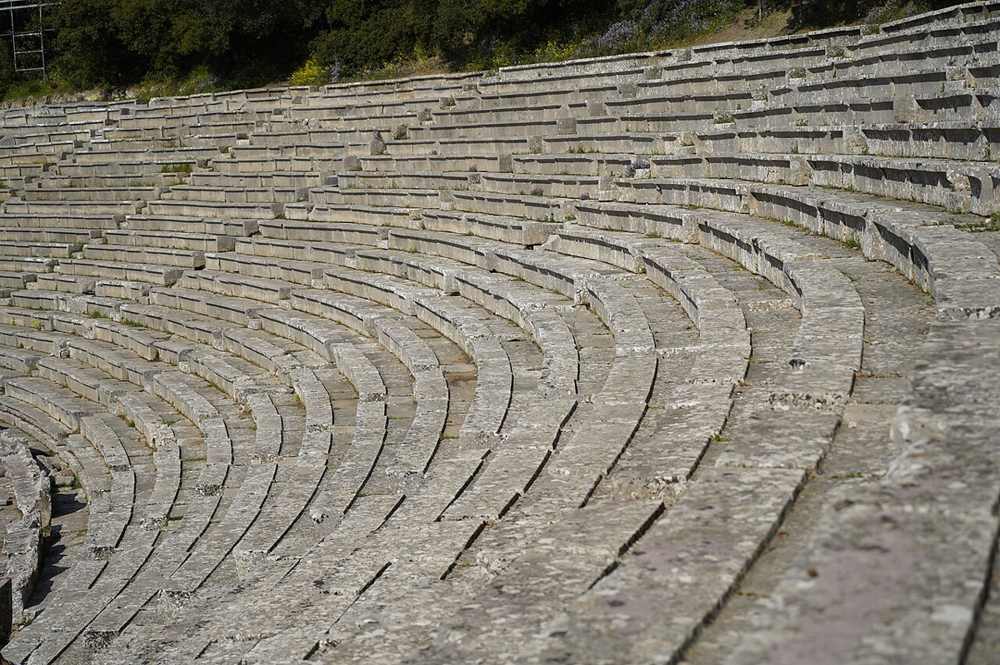
The theatre is the reason most visitors come, and it does not disappoint. Carved into the slope of Mount Kynortion in the fourth century before our era and later expanded, it could seat roughly fourteen thousand spectators across two tiers of stone benches. What stuns people first is the scale; what holds them is the acoustics. Stand on the circular orchestra at the centre, drop a coin or tear a sheet of paper, and the sound rises cleanly to the very top row. Guides delight in demonstrating this, and even sceptics leave converted.
The genius lies in the geometry. The semicircular bowl, the precise angle of the seating, and the limestone surfaces work together to amplify the human voice while filtering out low-frequency murmur from the crowd. It is a piece of engineering that modern architects still study, and it gives the place an almost magical quality when you experience it in person rather than reading about it.
How to experience the acoustics
Arrive early, before the tour groups fill the stone steps, and you may have a few quiet minutes to test the sound yourself. Climb to one of the upper rows and ask a travelling companion to speak softly at the centre. The sensation of hearing them clearly from such a distance, with no microphone and no electricity, is the single memory most people carry home. If you visit during the summer festival, you can watch a live performance under the stars, which is the way the space was always meant to be used.
Read more: Athens Escorts Call Girls
The Sanctuary of Asklepios
Long before the theatre drew its crowds, Epidaurus was famous as a place of healing. The sanctuary of Asklepios, the god of medicine, was the most celebrated therapeutic centre in the ancient Greek world, a kind of spiritual hospital where the sick travelled from across the Mediterranean in search of cures. The grounds spread out below the theatre, and exploring them gives a fuller picture of why this site mattered so deeply to ancient visitors.
Patients underwent a process that blended ritual, rest, and early medicine. After purification and offerings, the afflicted would sleep in a special hall, hoping the god would appear in their dreams with guidance. Priests interpreted these dreams and prescribed treatments that ranged from herbal remedies and dietary changes to exercise and bathing. The inscriptions recovered here record dozens of reported cures, a fascinating window into how the ancients understood the body and the mind.
Key structures to look for
Among the foundations and scattered columns you can trace several remarkable buildings. The most intriguing is the tholos, a circular structure with a mysterious underground labyrinth whose exact purpose still puzzles scholars. Nearby lie the remains of the great temple of Asklepios, the long sleeping hall, the guesthouse that once accommodated travellers, and the stadium where athletic games were held in the god’s honour. Take your time; the layout rewards a slow, attentive wander.
The Archaeological Museum
Set between the theatre and the sanctuary, the small but excellent museum brings the stones to life. Inside you will find surgical instruments that look startlingly modern, votive offerings shaped like the body parts patients hoped to heal, inscribed tablets recording cures, and beautifully reconstructed sections of the temple architecture. It is the perfect place to escape the midday sun for half an hour and to connect the abstract foundations outside with the human stories behind them.
Do not rush past the displays of medical tools. They reveal a sophistication that challenges easy assumptions about ancient healthcare, and they make the sanctuary feel less like a temple and more like a genuine centre of practical medicine. A visit here before or after walking the grounds will deepen everything you see.
Read more: Διαχείριση Προσωπικών Οικονομικών για Γυναίκες: Ο Οδηγός που Σου Δίνει Δύναμη
Beyond the Ruins: Beaches and the Sunken City
One of the joys of Epidaurus is that the archaeological wonders sit only a short drive from the sea. The coastal area, often called Palaia Epidavros and Nea Epidavros, offers calm pebbled beaches, sheltered coves, and gulf water that stays warm well into autumn. After a morning among the ruins, there is nothing finer than a swim in the clear, shallow shallows below the pines.
The most unusual attraction here is the Sunken City, the partially submerged remains of an ancient settlement that now rests just offshore in shallow water. On a calm day you can snorkel above the outlines of walls, foundations, and pottery scattered across the seabed. It is a magical, slightly surreal experience to float above a town that the sea reclaimed centuries ago, and it makes Epidaurus a destination for adventurous swimmers as well as culture lovers.
Where to swim
- The organised beach at Palaia Epidavros, with calm water and easy access for families and a few seaside tavernas within walking distance.
- The quieter coves north of the harbour, reached by short coastal paths, ideal if you want a more private spot away from the main strip.
- The Sunken City snorkelling area, best explored on a windless morning with a mask and fins for the clearest view of the underwater ruins.
- Small pebble beaches near Nea Epidavros, framed by greenery and offering shade beneath the trees during the hottest hours.
Villages and the Surrounding Landscape
The region around Epidaurus is a patchwork of orange and olive groves, vineyards, and small whitewashed villages where daily life carries on much as it has for generations. Palaia Epidavros, the coastal village, is the natural base for most visitors, with a working fishing harbour, a clutch of tavernas along the water, and a relaxed seaside atmosphere that feels worlds away from the bustle of larger resorts.
Inland, the landscape rises into hills planted with citrus and dotted with chapels. In spring the orange blossom perfumes the entire valley, and roadside stalls sell honey, oranges, and local olive oil. Driving the quiet country lanes is a pleasure in itself, with sudden views of the gulf opening between the trees. The nearby town of Lygourio, close to the archaeological site, is a good stop for supplies, a coffee, or a quieter meal away from the coast.
If you have extra time, the wider Argolid region is rich with day trip possibilities. The medieval town of Nafplio, with its Venetian fortress and elegant old quarter, lies a short drive west and makes a perfect evening excursion. The ancient citadels of Mycenae and Tiryns are also within easy reach, allowing you to pair Epidaurus with some of the most important Bronze Age sites in Greece.
See also: Epidaurus Day Tour – Self-Guided Epidaurus Tours to Ancient Epidaurus
Read more: Γονεϊκότητα και Ανατροφή Παιδιών στη Σύγχρονη Εποχή: Οδηγός Ισορροπίας και Ενσυναίσθησης
Food and Local Flavours
Eating in Epidaurus means eating simply and well. The coastal tavernas specialise in whatever the boats brought in that morning, and a meal of grilled fish, a horiatiki salad heavy with ripe tomatoes and creamy feta, and a carafe of local wine, eaten at a table almost touching the water, is one of the region’s great pleasures. The pace is slow, the portions are generous, and the welcome is genuine.
Because the area is famous for its citrus, oranges find their way into many local dishes and sweets. Look out for orange-scented cakes, marmalades, and the syrupy spoon sweets that families still make at home. Inland, the cooking leans toward hearty country fare, with slow-cooked lamb, wild greens, and rich casseroles featuring on village menus.
What to try
- Fresh grilled fish and seafood at the harbour tavernas, chosen straight from the day’s catch and dressed simply with oil and lemon.
- Local olive oil and oranges, sold at roadside stalls and farm shops throughout the surrounding valley.
- Traditional spoon sweets and orange-based desserts, often offered as a complimentary treat at the end of a meal.
- Country dishes such as slow-roasted lamb, stuffed vegetables, and wild greens in the inland villages around Lygourio.
- Regional wines from the vineyards of the Argolid, which pair beautifully with both the seafood and the heartier dishes.
Where to Stay
Accommodation in Epidaurus ranges from family-run guesthouses and small seaside hotels to self-catering apartments and a handful of stylish boutique stays. The coastal village is the most convenient base if you want to combine the archaeological sites with beach time, since you can walk to tavernas in the evening and reach the theatre in well under half an hour by car.
For those who prefer quiet and greenery, there are charming rooms and villas set among the orange groves inland, where you can wake to birdsong and the scent of citrus rather than the sound of the sea. These rural stays often come with home-cooked breakfasts and a warm, personal welcome that captures the best of Greek hospitality.
Many travellers visit Epidaurus as a day trip from Nafplio, which has a far larger choice of hotels and a lively old town for the evening. This works well if your priority is the sights, though staying locally lets you experience the slower, sweeter side of the region and enjoy the coast once the day visitors have gone home.
Read more: Γονεϊκότητα και Ανατροφή Παιδιών στη Σύγχρονη Εποχή: Οδηγός Ισορροπίας και Ενσυναίσθησης
Best Time to Visit and Getting Around
Epidaurus is at its finest in late spring and early autumn, when the days are warm but not scorching, the sea is swimmable, and the landscape is at its greenest or its most golden. Spring brings the orange blossom and wildflowers; autumn offers soft light, ripe fruit, and quieter sites. Summer is hot and busy, but it is also the season of the great festival, when ancient drama is staged in the theatre under the night sky, an experience worth braving the heat for.
Winter is mild and very peaceful, with few visitors and a chance to have the ruins almost to yourself, though some tavernas and hotels reduce their hours. Whatever the season, aim to visit the theatre and sanctuary in the early morning or late afternoon to avoid both the crowds and the harshest sun.
Getting there and around
Having your own car is by far the easiest way to explore the region, as it lets you combine the sites with the beaches, villages, and nearby towns at your own pace. The drive from Athens takes roughly two and a half hours along good roads, while Nafplio is only a short hop away. Public buses connect the major towns and the archaeological site, but services can be infrequent, so plan ahead if you are relying on them.
Within the area, distances are short and the roads are scenic, so even modest detours are rewarding. Comfortable shoes are essential for the uneven ground at the sanctuary, and a hat and water are non-negotiable in the warmer months. If you are visiting for an evening performance, allow extra time for parking, which fills quickly before the show.
Practical Tips for Visitors
A little planning makes a visit to Epidaurus smoother and more rewarding. Below are the essentials worth keeping in mind before you set off.
Read more: Topical Authority: Πώς να Γίνετε Αυθεντία στη Θεματική σας
- Buy a combined ticket where available, which covers the theatre, the sanctuary, and the museum and represents good value for a full visit.
- Wear sturdy, comfortable footwear, as the paths around the ancient sanctuary are uneven and the theatre steps are steep.
- Bring sun protection and plenty of water in summer, since shade is limited across much of the archaeological area.
- Visit early or late in the day for the best light, the smallest crowds, and the most atmospheric experience of the theatre.
- Pack a swimsuit and a snorkel if you plan to combine the ruins with a dip at the coast or a look at the Sunken City.
- Check festival dates in advance if you hope to see a performance, as tickets for popular nights sell out well ahead.
- Respect the site by staying off fragile structures and following the marked paths, helping preserve this remarkable place for the future.
Allow at least half a day for the archaeological sites alone, and a full day if you want to add a swim and a leisurely taverna lunch. The beauty of Epidaurus is that it never feels rushed; the more time you give it, the more it gives back.
Why Epidaurus Belongs on Your Greek Itinerary
Many travellers race through the Peloponnese, ticking off the famous names and moving on. Epidaurus invites you to do the opposite. Here the headline attraction, the theatre, is genuinely world class, yet it sits within a landscape that encourages lingering. You can spend a morning among healing temples that shaped the history of medicine, swim above a drowned city in the afternoon, and watch the sun set over the gulf from a harbour taverna in the evening, all within a few easy kilometres.
It is this combination, the cultural depth paired with natural beauty and a slow village pace, that makes the region so memorable. It rewards travellers who are willing to look a little closer and stay a little longer, and it offers a gentler, greener side of Greece that many visitors never discover.
Epidaurus is more than a single famous monument; it is a whole pocket of the Peloponnese where history, nature, and everyday Greek life sit comfortably side by side. Walk the perfect curve of the theatre, trace the foundations of the ancient sanctuary, float above the sunken ruins in the bay, and end your day with fresh fish and local wine by the water. Few places manage to be so significant and so serene at once. Whether you come for a focused day trip or a relaxed two-day escape, Epidaurus will leave you with the sense of having touched something rare, a corner of Greece where you can still hear a whisper rise to the stars.
Read More
Discover more from Top New Healthy Lifestyle:
- USEFUL LINKS
- News1: SEO Content Strategy
- Perfume & Fragrance: A Guide
- The Best Greek Islands for Families
- Dating After Divorce
About the Author